

4/8/2026
The former Ugandan diplomat is credited with developing the Security Council’s informal “straw poll” system in 1981, a method that has since become a part of choosing the UN Secretary General
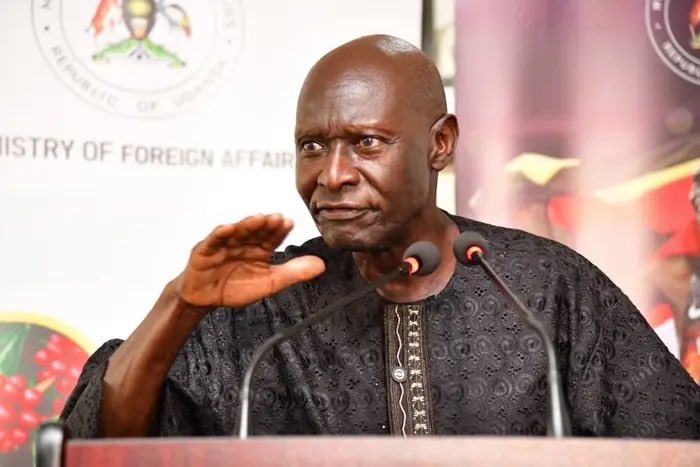
When Uganda’s Olara Otunnu enters the United Nations Security Council’s secretive selection process for the next secretary-general, he will be competing under rules he helped create more than four decades ago.
The former Ugandan diplomat is credited with developing the Security Council’s informal “straw poll” system in 1981, a method that has since become a part of choosing the UN chief. The same process is now being used to assess his own chances of succeeding António Guterres.
Otunnu, who was Uganda’s permanent representative to the UN from 1980 to 1985, served as president of the Security Council in 1981, when the body faced a difficult search for a new secretary-general.
Before the introduction of the straw polls, the selection of a UN secretary-general often involved prolonged negotiations among Security Council members, especially the five permanent members — China, France, Russia, the United Kingdom and the United States — who hold veto power.
In 1981, the council was struggling to find consensus on a successor to Kurt Waldheim, whose tenure was ending.
Otunnu introduced a confidential voting method to allow members to privately express their views on candidates without immediately turning the process into a public diplomatic confrontation.
The system involved asking council members which candidates they would “encourage” and which they would “discourage”.
It was designed to identify candidates with broad support while quietly revealing those who faced opposition from powerful members.
The process helped break the deadlock and contributed to the emergence of Javier Pérez de Cuéllar of Peru as secretary-general. It later became known as the “Otunnu Formula”.