

Daniel Mugula
30/10/2026
Ugandans are facing renewed pressure on household budgets as rising food prices push annual headline inflation to 5.8 per cent in October 2026, up from 4.7 per cent recorded in September, with the Uganda Bureau of Statistics (UBOS) predicting that food prices could begin falling in the coming months following improved weather conditions.
Food and Non-Alcoholic Beverages inflation, one of the biggest contributors to the increase, rose sharply to 7.5 per cent in the year ending October, compared to 4.7 per cent in September. Transport inflation also increased to 11.9 per cent from 9.8 per cent, adding to the cost of living for households.
However, UBOS has expressed optimism that the pressure from rising food prices could ease within the next one to two months as improved weather conditions support agricultural production, leading to increased supplies in markets across the country.
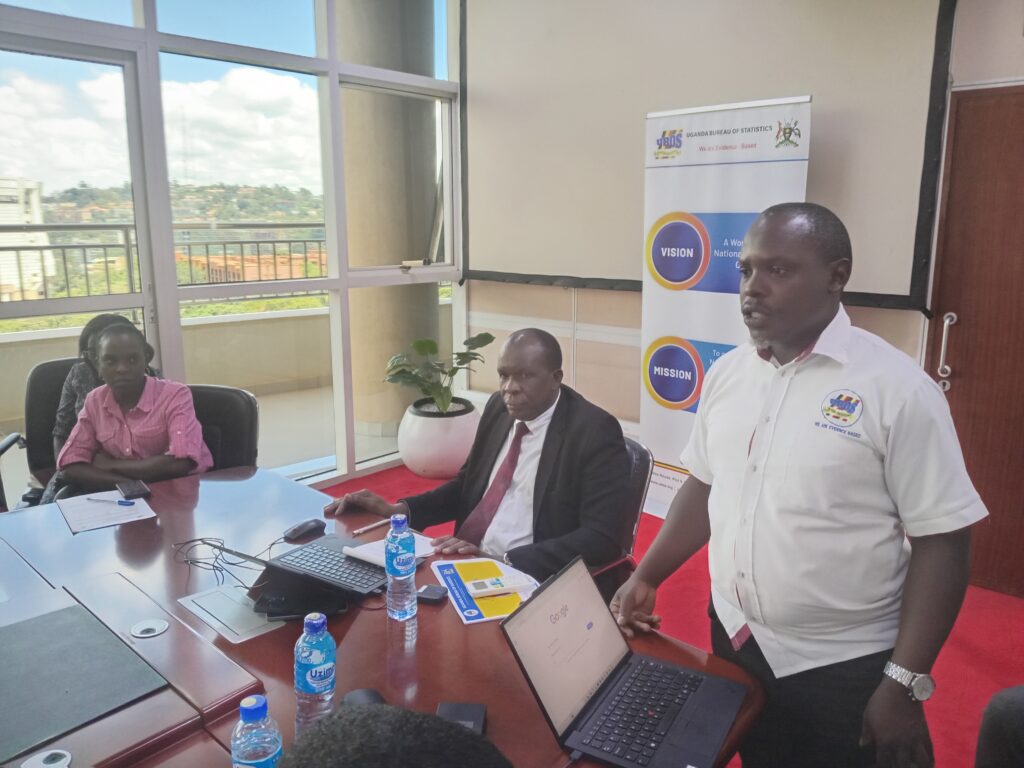
Speaking to journalists at the UBOS headquarters in Kampala on Friday, Samuel Echoku, Head of the Macroeconomic Statistics Department at UBOS, said the recent increase in food prices was largely driven by unfavourable weather conditions but expected the situation to improve as harvesting increases.
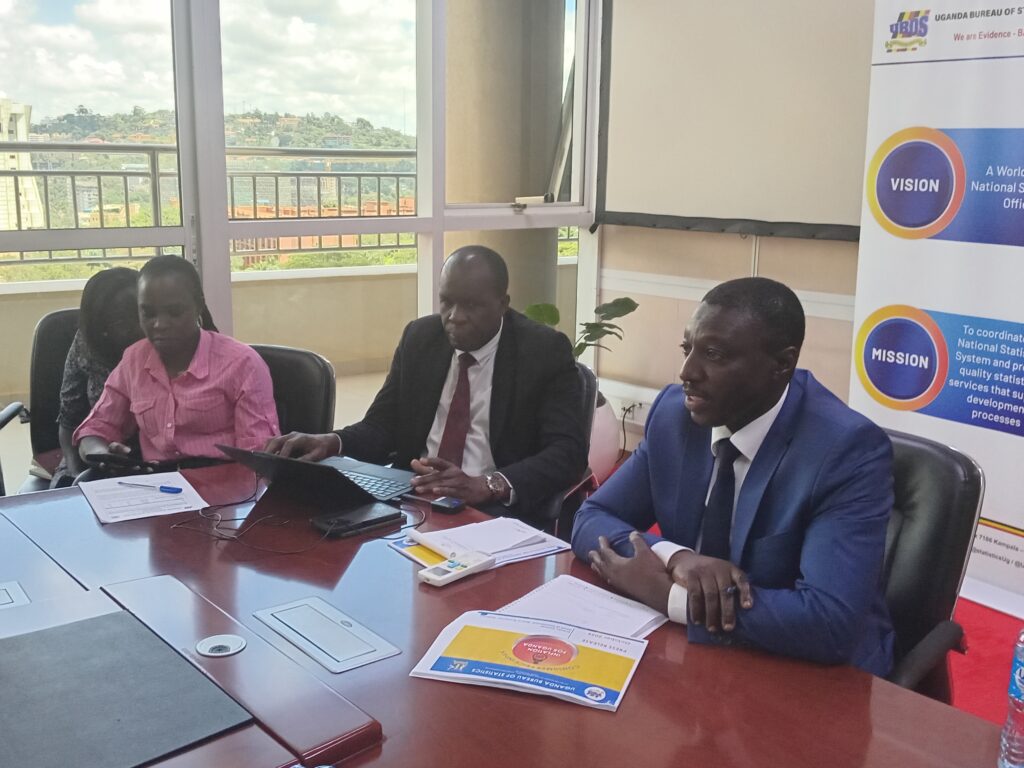
Echoku said increased food production would eventually flood markets with agricultural produce, forcing prices down and easing the contribution of food to overall inflation.
He said food inflation could even turn negative if supplies increase significantly, although other economic factors, particularly transport costs and exchange rate movements, could continue exerting pressure on prices.
“Because of the good weather we are receiving now, food prices will start coming down. In the next one or two months, markets will be flooded with produce, and the drivers we shall be talking about will be something else, not food,” Echoku said.
He added that Uganda was unlikely to experience a prolonged food-price crisis, although consumers could continue facing pressure in the short term.
On the exchange rate, Echoku said the situation was being managed but cautioned that improvements in the exchange rate would not necessarily mean an immediate return to previous levels because of changing economic dynamics.
He explained that when the exchange rate moves to a higher level, it may not automatically return to where it was before, even when economic conditions improve.
He said inflationary pressures arising from exchange rate movements were expected to gradually moderate, although the adjustment would take time.
According to the UBOS October Consumer Price Index report, several other expenditure categories also recorded increases in annual inflation.
Housing, Water, Electricity, Gas and Other Fuels inflation rose to 6.8 per cent from 6.2 per cent in September, while Restaurants and Accommodation Services increased to 2.8 per cent from 2.3 per cent.
Furnishings, Household Equipment and Routine Household Maintenance inflation increased to 3.8 per cent from 3.3 per cent, while Clothing and Footwear rose to 1.7 per cent from 1.3 per cent.
Personal Care, Social Protection and Miscellaneous Goods inflation increased to 1.8 per cent from 1.6 per cent, while Alcoholic Beverages, Tobacco and Narcotics rose to 2.0 per cent from 1.7 per cent.
Recreation, Sport and Culture inflation increased to 1.8 per cent from 1.6 per cent, while Health inflation rose to 1.8 per cent from 1.7 per cent. Information and Communication inflation also edged up to 3.3 per cent from 3.2 per cent.
Education Services inflation remained unchanged at 5.7 per cent, while Insurance and Financial Services maintained the September rate of 10.1 per cent.
At the regional level, Kampala Middle Income recorded the second-highest annual inflation rate at 6.1 per cent, compared to 4.7 per cent in September.
The increase was largely driven by Food and Non-Alcoholic Beverages inflation, which rose to 8.6 per cent from 5.9 per cent, and Transport inflation, which increased to 13.4 per cent from 10.4 per cent.
Mbarara Centre registered the lowest annual inflation rate at 4.8 per cent, up from 2.9 per cent in September.
UBOS attributed the changes partly to Education Services inflation, which declined to 1.4 per cent from 2.3 per cent, and Health inflation, which fell to 1.3 per cent from 1.7 per cent.
On a monthly basis, Food and Non-Alcoholic Beverages inflation increased by 2.3 per cent in October, compared to a 2.6 per cent rise in September.
Transport inflation accelerated to 1.2 per cent from 0.7 per cent, while Housing, Water, Electricity, Gas and Other Fuels inflation rose to 0.7 per cent from 0.1 per cent.
Education Services recorded a monthly increase of 1.7 per cent after remaining unchanged in September. Restaurants and Accommodation Services rose by 0.8 per cent, while Clothing and Footwear increased by 0.7 per cent.
Furnishings, Household Equipment and Routine Household Maintenance rose by 0.6 per cent, while Personal Care and Miscellaneous Goods increased by 0.2 per cent.
Echoku urged consumers to use price information published by UBOS to make informed purchasing decisions, saying the statistics provide an important guide to understanding movements in market prices.
However, he said protecting consumers against exploitation, substandard goods and unfair business practices was beyond the direct mandate of UBOS and should be handled by the responsible government ministries and agencies.
He explained that consumer protection involves several issues, including product quality and standards, which fall under the responsibility of relevant institutions such as the Uganda National Bureau of Standards.
On concerns about possible price increases during the festive season, Echoku said the country currently had relatively stable supplies of goods and did not expect widespread shortages that could automatically trigger significant price increases.
He said UBOS had not historically observed consistent festive-season increases in accommodation and alcoholic beverage prices across the wider economy.
However, he acknowledged that accommodation facilities in tourism destinations, particularly around national parks and game reserves, could experience seasonal price changes depending on tourist demand.
Echoku maintained that improved weather conditions and increased agricultural production could help bring down food prices and moderate inflation in the coming months, although transport costs and exchange rate movements would remain important factors influencing the cost of living.
Uganda’s annual inflation is measured by UBOS using the Consumer Price Index (CPI), which tracks changes in the prices of goods and services consumed by households across the country. The October figures reflect price movements across different expenditure categories and geographical areas, providing an indication of the changing cost of living.