

By Mugula Dan
The Ministry of Education and Sports has urged local governments to strengthen teacher recruitment, improve the utilization of wage funds, and ensure that District Service Commissions are fully constituted to address Uganda’s growing teacher shortage.
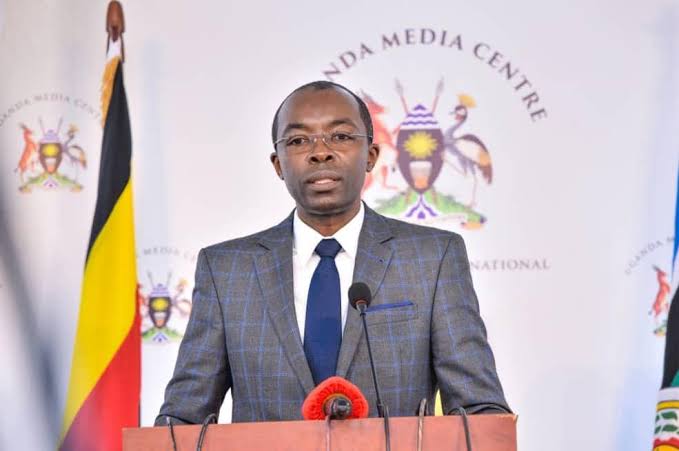
Dr.Dennis Mugimba
Speaking at the Uganda Media Centre, Dr. Dennis Mugimba said the government had been releasing funds to local governments to replace teachers who resign, retire, or pass away. However, he expressed concern over the failure to fully utilize the allocated resources.
He said the Ministry of Finance recovered an average of Shs58 billion in unutilized wage funds from local governments between the 2021 and 2023 financial years, according to figures he recalled.
Dr. Mugimba said the funds could have supported the recruitment of approximately 8,000 teachers annually. He called on the media to investigate the current status of unutilized wage funds and teacher recruitment.
He attributed delays in recruitment partly to inadequate facilitation and the incomplete constitution of District Service Commissions, whose establishment is the responsibility of local councils, including LC5 leadership.
The ministry has held discussions with the Ministry of Local Government to ensure that the commissions are properly constituted and able to recruit teachers efficiently.
Dr. Mugimba noted that teacher recruitment in primary education has not kept pace with the growth in learner enrolment, despite improvements in secondary education.
He said the government was assessing the resources required to implement completely free Universal Primary Education (UPE), including the recruitment of contract teachers. He added that Cabinet was expected to provide direction on the required resources before the end of the year.
He emphasized that improving the teacher–learner ratio requires coordinated efforts among the central government, local governments, and education institutions.
Dr. Mugimba also raised concerns over discrepancies in learner enrolment figures, citing a 2024 investigation into ghost learners in Ntungamo District.
According to his account, a team visited 45 of the district’s 249 primary schools and found approximately 5,400 non-existent pupils, representing about 19 per cent of the reported enrolment in the inspected schools.
He called for stronger supervision and accountability across all levels of government, from schools and parishes to sub-counties and districts, to ensure accurate education data and proper management of public resources.
He further said teacher professional development should combine training with regulation, including enforcement of the Teacher Code of Conduct by the National Teacher Council.
Meanwhile, Professor Proscovia Mubiru Ssentamu, Vice Chancellor in charge of Academic Affairs, outlined preparations for the upcoming international education conference at the Uganda National Institute for Teacher Education (UNITE).
She said a pre-conference interactive lecture would be held on September 30, targeting early-career academics, master’s and PhD students, and mid-career leaders.
The practical workshop will focus on five thematic areas:
Digital responsibility and technology in education.
* Evidence synthesis and academic writing.
* Inclusive competence-based assessment and curriculum.
* Leadership and sustainability of reforms.
* Gender equity and inclusion.
Professor Ssentamu said the workshop would use practical, hands-on sessions to help participants improve their research, teaching, leadership, and professional skills.
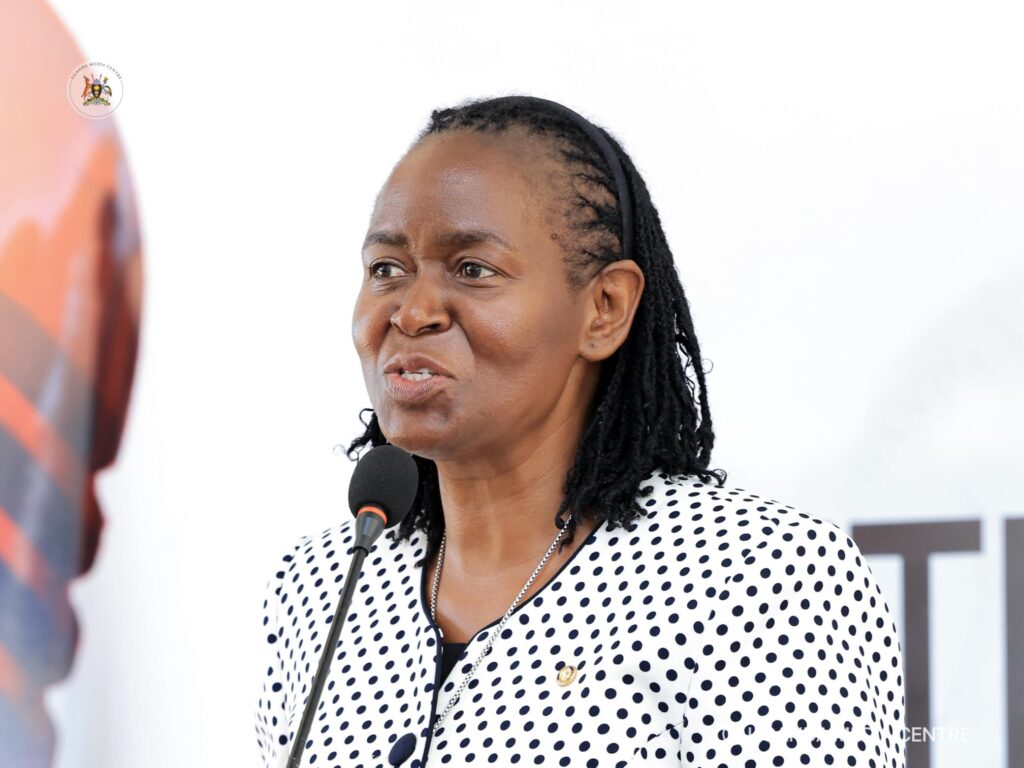
prof. Ssentamu Proscovia Mubiru
The main two-day conference is expected to attract an international audience, with participants from nearly 16 countries responding to the institution’s call for abstracts. More than 250 abstracts have reportedly been submitted.
The conference will feature keynote addresses, panel discussions, and breakout sessions focusing on preparing the 21st-century teacher, digital innovation and artificial intelligence, teacher identity and professionalism, and leadership, financing, and partnerships in education reform.
The discussions will examine how Uganda and other countries can strengthen teacher education, promote responsible use of technology, and sustain reforms to improve learning outcomes.