


Daniel Mugula
29 Sep 2026
KAMPALA — The Kampala Capital City Authority (KCCA) has clarified the process and costs involved in obtaining government development and building permits, saying a government control permit can be processed within the statutory period of 30 days.

Speaking to journalists at Kitante Primary School, KCCA Deputy Executive Director Benon Kigenyi said the authority is now using the IRA system to process applications and enable developers to track the approval process.
Kigenyi said once the government control permit has been approved, developers can proceed to the next stage of obtaining a building permit.
He also dismissed concerns that government control permits are too expensive for ordinary Kampala residents.
“Some people think it is very expensive to obtain a government control permit in Kampala. I want to assure the people of Kampala that anyone who wants to build a house for their own accommodation, such as a bungalow, pays only Shs100,000,” Kigenyi said.
He added that government plans for commercial buildings attract a fee of Shs150,000.
At the building-permit stage, charges are calculated based on the size of the proposed development, at a rate of Shs3,700 per square metre.
For example, a 120-square-metre residential house would attract a building permit fee of approximately Shs444,000. According to Kigenyi, larger residential buildings could attract fees of Shs1 million or Shs2 million, depending on their size.
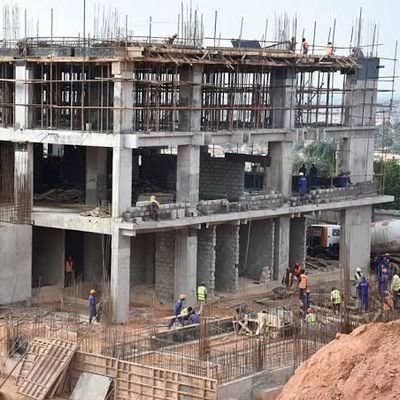
For commercial developments, the costs are considerably higher and depend on factors including the size of the building and the number of floors. Kigenyi said fees for commercial buildings can range from approximately Shs12 million to Shs70 million.
Two Different Approval Stages
Kigenyi explained that the government control permit and building permit serve different purposes in the development approval process.
A government control permit gives a developer permission to develop a particular site in accordance with land ownership requirements and government planning principles.
He said developers must also ensure that their proposed projects are compatible with the designated land use in the area.
“For example, you cannot establish a hospital in an area that has not been designated for such a facility. You have to develop according to the purpose for which an area has been planned,” he explained.
Similarly, areas designated for residential use may not be used for certain facilities that are inconsistent with the approved planning regulations.
Kigenyi said these considerations are handled at the government-control stage before the application proceeds to building control.
“Once that has been completed, structural engineering, mechanical and other technical issues are handled by the Building Control Committee,” he said.
The clarification is expected to help property owners and prospective developers in Kampala understand the approval process, the distinction between the two permits and the fees associated with each stage before commencing construction.