


Daniel Mugula
Thu,8 October 2026
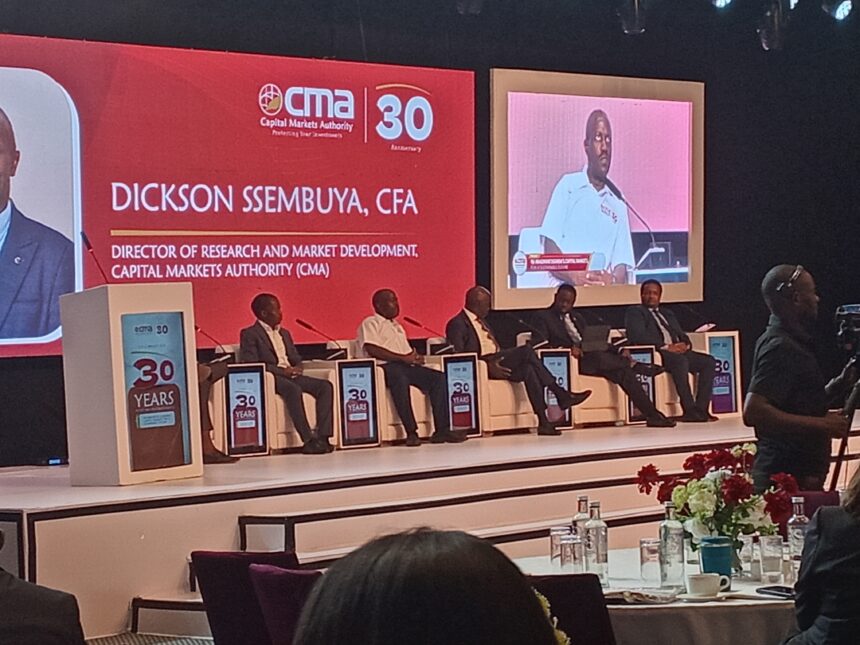
KAMPALA, Uganda — Uganda’s capital markets are entering a new phase focused on expanding investment opportunities, embracing technology, attracting long-term capital and increasing participation beyond Kampala, the Capital Markets Authority (CMA) has said.
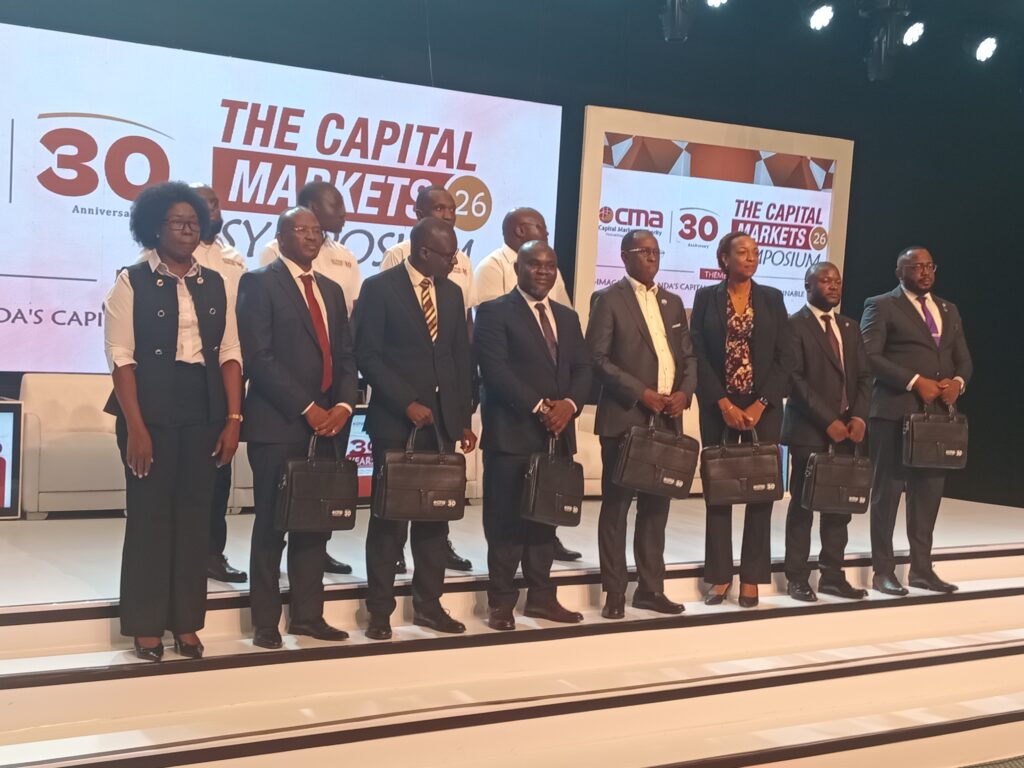
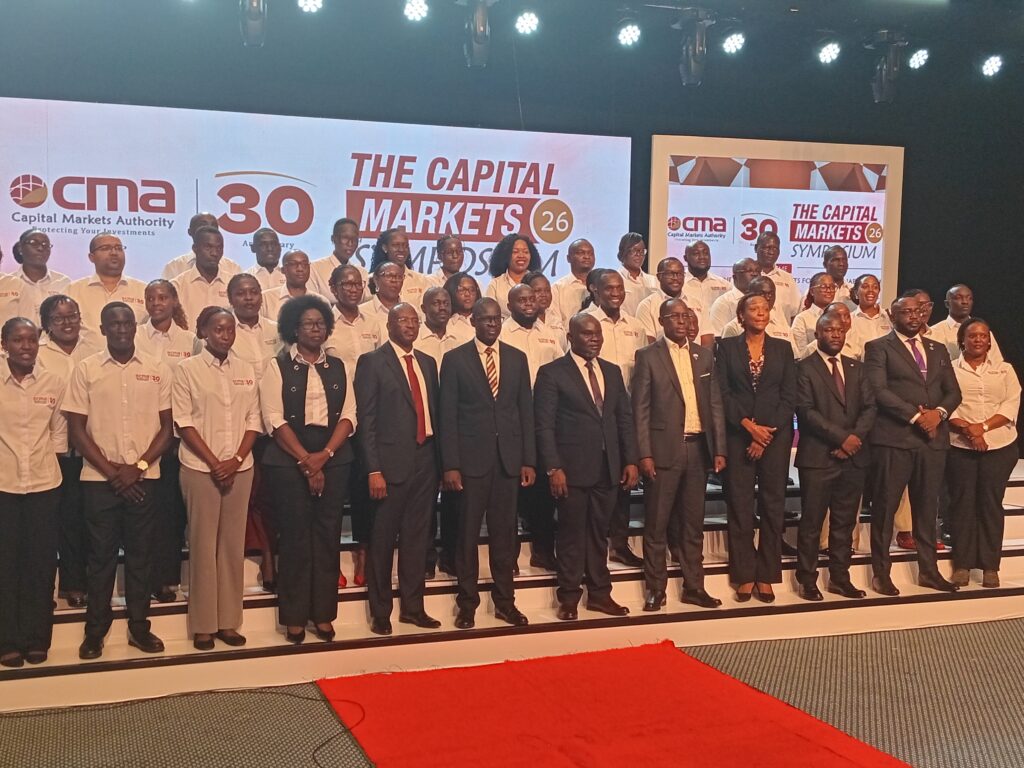
The authority made the remarks as it marked 30 years of regulating and developing Uganda’s capital markets under the theme “Re-imagining Uganda’s Capital Markets for a Sustainable Future.”
CMA Chief Executive Officer Josephine Okui Ossiya said the authority’s priority is to maintain investor confidence while creating a fair, transparent and orderly market that can contribute more significantly to Uganda’s economic growth.
She said CMA’s mandate includes regulating and developing the market, protecting investors, promoting financial literacy and encouraging innovation.
“Capital markets” have also become an important source of financing and investment, with Ossiya highlighting the growth of collective investments, public offers and market capitalisation as evidence of the sector’s progress.
She said the authority is also using a regulatory sandbox to work with market participants to test innovative financial products, understand their risks and develop appropriate safeguards before wider rollout.
Technology to drive wider participation
CMA Board Chair Saul Sseremba said technology will be central to the next phase of the market’s development.

He noted that Uganda’s capital markets have moved from the early days of paper share certificates and open-outcry trading to electronic records and automated trading systems.
According to Sseremba, the next challenge is to use technology to make investing easier and more accessible to ordinary Ugandans, including young people and communities outside Kampala.
He said CMA is using digital platforms, including social media, to explain capital markets in simpler language and reach the younger generation.
The ambition, he said, is for a farmer or young entrepreneur outside Kampala to be able to access investment opportunities almost as easily as using mobile money.

Sseremba said Uganda’s capital market has made significant progress since the CMA was established in 1996, but the market remains small compared with the size and needs of the economy.
He called for faster growth, greater participation and stronger use of technology to support Uganda’s long-term development ambitions.
He said the authority’s strategic plan for 2025/26–2030 is focused on catalysing participation and harnessing capital markets to support the country’s growth strategy.
Ossiya also highlighted opportunities in sustainable finance and Sharia-compliant products, including sukuk, which could bring previously excluded groups into the formal investment market.
She said improving financial literacy remains critical because many Ugandans still have limited understanding of how capital markets work and how they can participate.
National Social Security Fund (NSSF) Executive Director Patrick Ayota challenged CMA and other market players to address structural barriers that make it difficult for private companies to attract long-term capital.
Ayota pointed to high government bond yields as a major challenge, arguing that private companies must compete with relatively high-return government securities that carry significantly lower risk.
He said this makes it difficult for businesses to attract investment at affordable rates.
Ayota called for stakeholders to examine the country’s financial structure and find ways of freeing more long-term capital for businesses and productive investment.

He also urged CMA and other institutions to focus on creating more investors and market participants, rather than waiting for economic growth alone to generate them.
He cited NSSF’s growing interest in investing in early-stage businesses as an example of how institutions can help create businesses, jobs and future contributors to the investment ecosystem.
The CMA was established in 1996 by an Act of Parliament to regulate, develop and promote an orderly, fair and efficient capital market in Uganda.
The Uganda Securities Exchange was licensed in 1997, while Uganda Clays became the first company to conduct a public share offer around 2000.
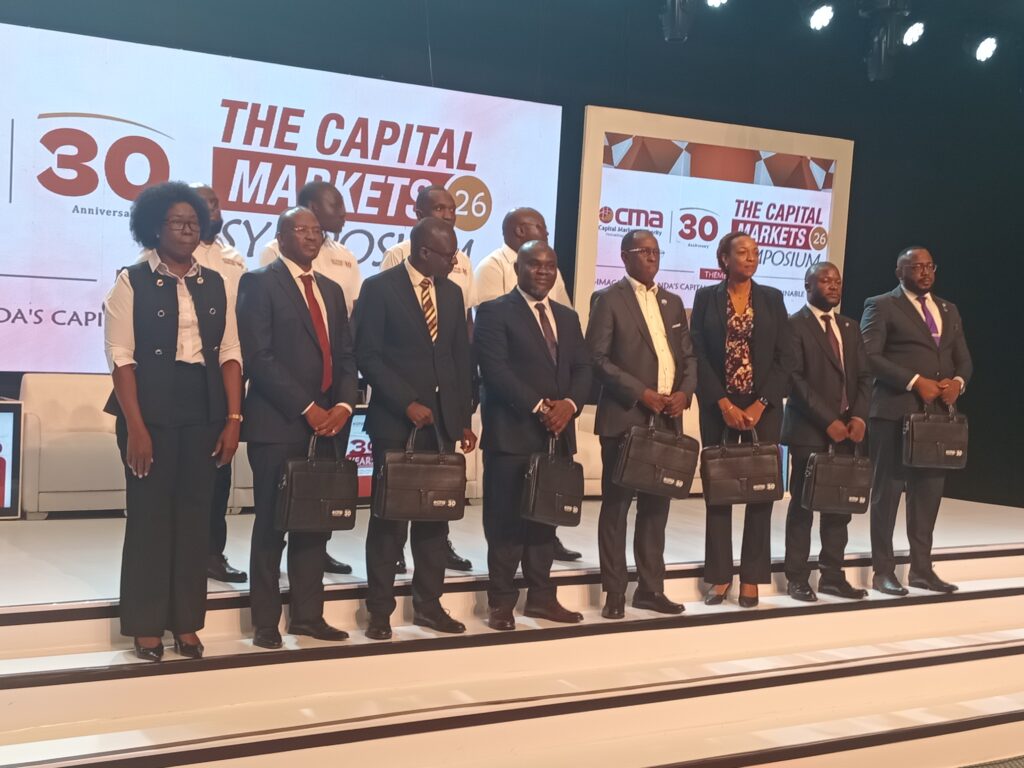
Since then, Uganda’s capital markets have expanded to include listed companies, government and corporate bonds, collective investment schemes, fund managers, brokers, dealers and other licensed market participants.
The anniversary celebrations also recognised the contribution of the individuals and institutions that built the market from its early days.
As the authority begins its next chapter, CMA leadership says the focus will be on scale, innovation, investor protection, regional integration and wider public participation.

Ossiya said the authority is preparing a second Capital Markets Development Master Plan for the next ten years, which will set out specific actions, responsibilities and measures of progress.
She said the authority intends to report publicly on progress each year to strengthen accountability and confidence in the market.
“Let’s plan wisely, let’s build patiently, and let’s make Uganda’s capital markets work for more Ugandans,” Ossiya said
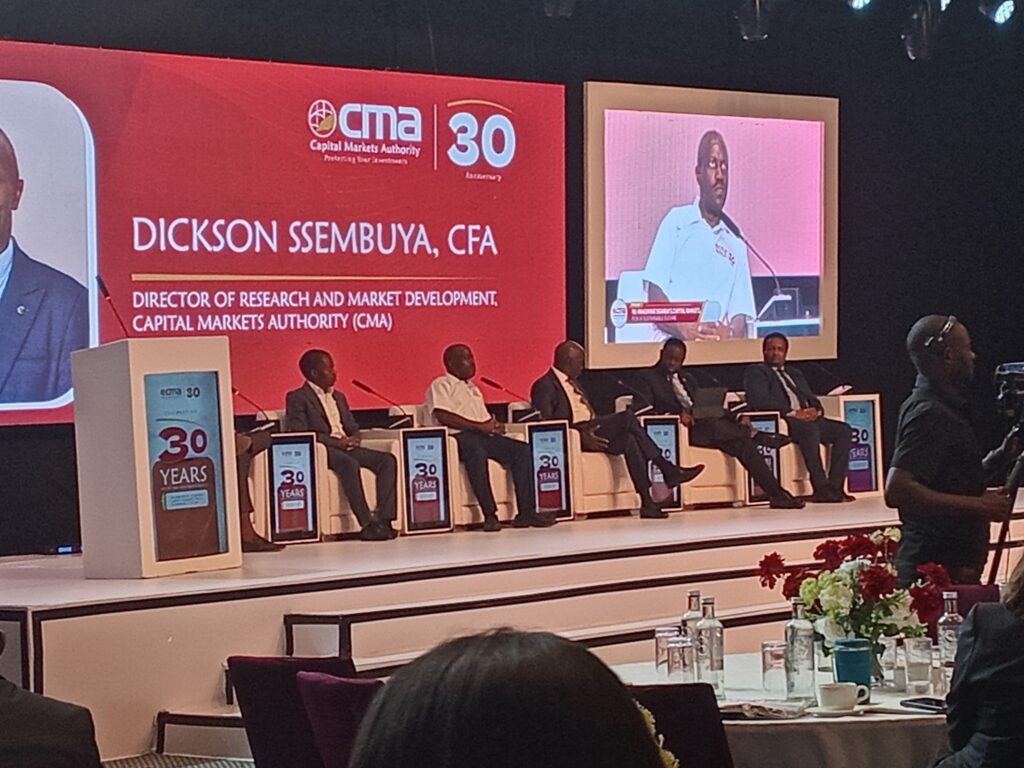
Economic Development Policy and Research Commissioner Joseph Enyimu said the market has reached important milestones, with the market capitalisation of listed companies now at about Shs20 trillion, while collective investment schemes have surpassed Shs17 trillion.
However, he said the market remains small compared with the size of Uganda’s economy and must now shift from consolidation to scaling up.
“Goal is, but we have not yet arrived,” Enyimu said, calling for faster growth as technology creates new opportunities for the sector.
He said CMA’s 2025/26–2030 strategic plan is focused on catalysing participation and harnessing capital markets to help finance Uganda’s ambitious economic growth agenda.