

Daniel mugula
22/10/2026
The Kampala Capital City Authority (KCCA) has called for an increase in its budget for the 2027/2028 financial year, saying additional funding is needed to implement its strategic plan, improve service delivery and address persistent challenges affecting Kampala residents.
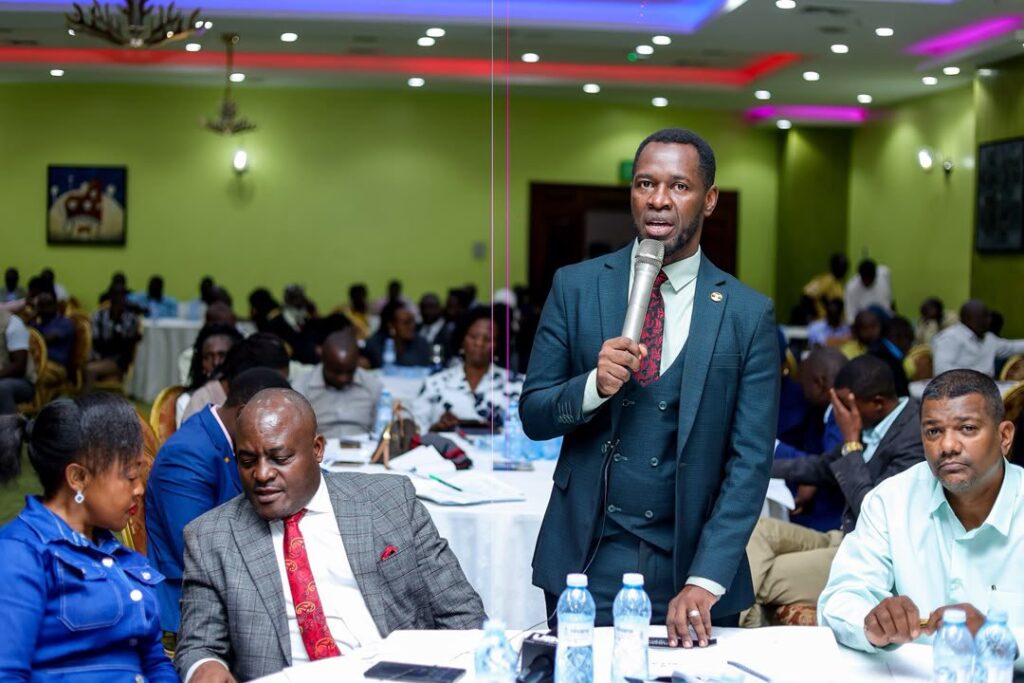
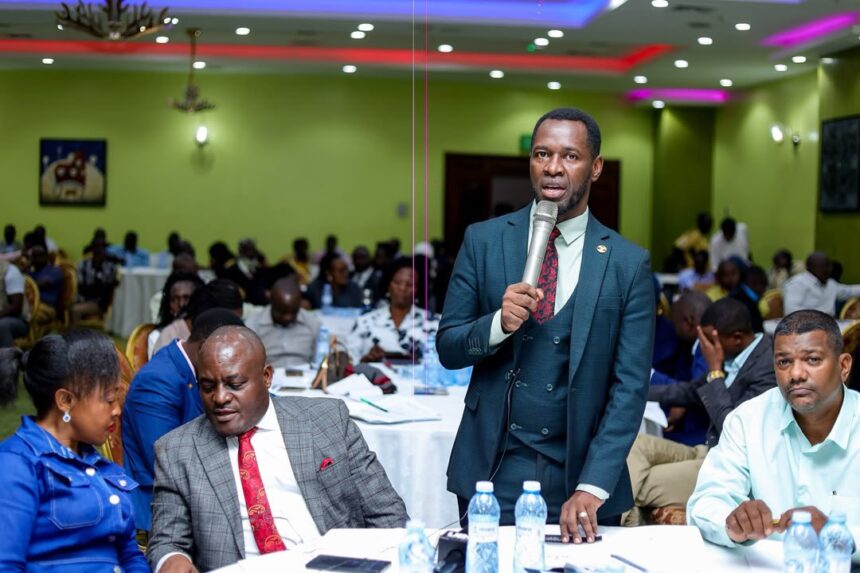
Speaking at the Vote 122 KCCA Budget Conference for the 2027/2028 financial year at Imperial Royale Hotel in Kampala, KCCA Executive Director Hajjat Sharifah Buzeki said the authority’s performance had been affected by inadequate funding, noting that it had achieved only 34 per cent of its planned targets in the third quarter, partly because the full amount planned and approved by the National Planning Authority (NPA) had not been provided.
Buzeki said KCCA had requested additional support from the government and retained some one-off allocations in its budget to sustain priority interventions under its strategic plan. The authority was also pursuing projects with development partners to bridge funding gaps.
She appealed to the Minister of State for Kampala to support an increase in the authority’s budget, saying that although its funding requirements stood at about Shs3.4 trillion against a much lower available allocation, any increment would improve implementation of priority programmes.
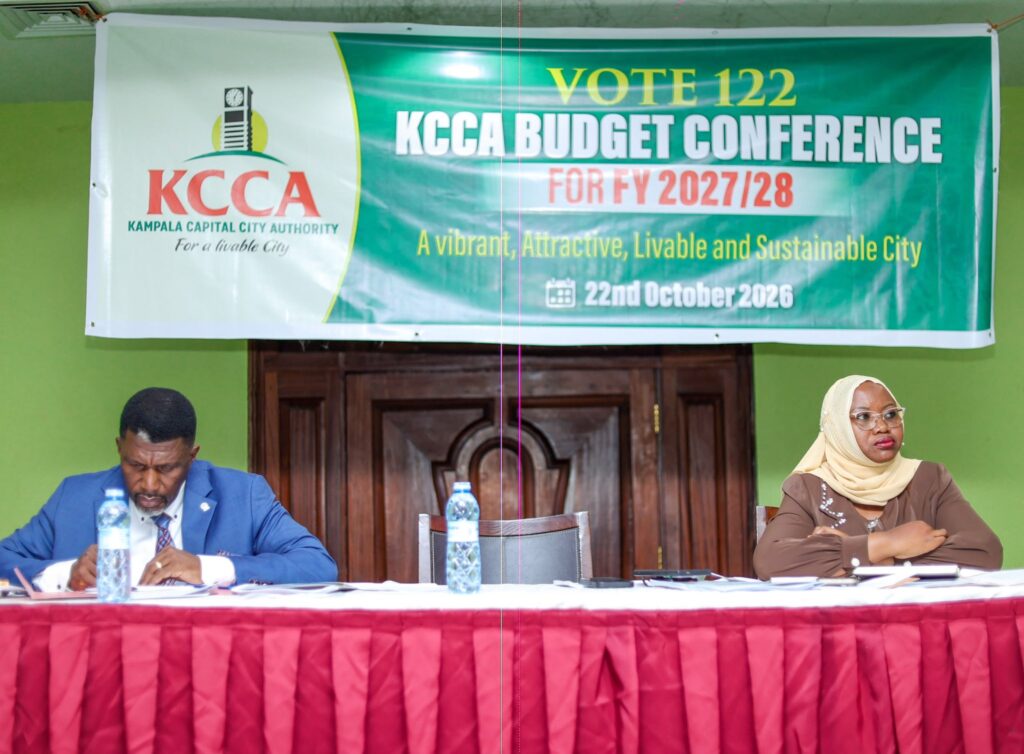
The conference brought together the Minister of State for Kampala, KCCA officials, the authority’s Speaker and division mayors, who presented their budget priorities and raised concerns over flooding, inadequate drainage, incomplete markets, schools, health facilities, street lighting, enforcement and the implementation of devolved functions.
Buzeki said KCCA would continue engaging leaders on planned infrastructure projects, including market developments, to ensure that the designs reflected the needs of the communities concerned.
She said the authority was in the final stages of designing some market projects and would organise consultations with division leaders and other stakeholders before proceeding. She also said KCCA was working with the World Bank to secure funding for a proposed digital market, which is being planned as a roadside market.
On enforcement, Buzeki said the authority did not support forceful or inhumane treatment of traders and other members of the public. She directed enforcement teams to sensitise affected people before taking action and said property owners should be given an opportunity to correct violations before punitive measures were considered.
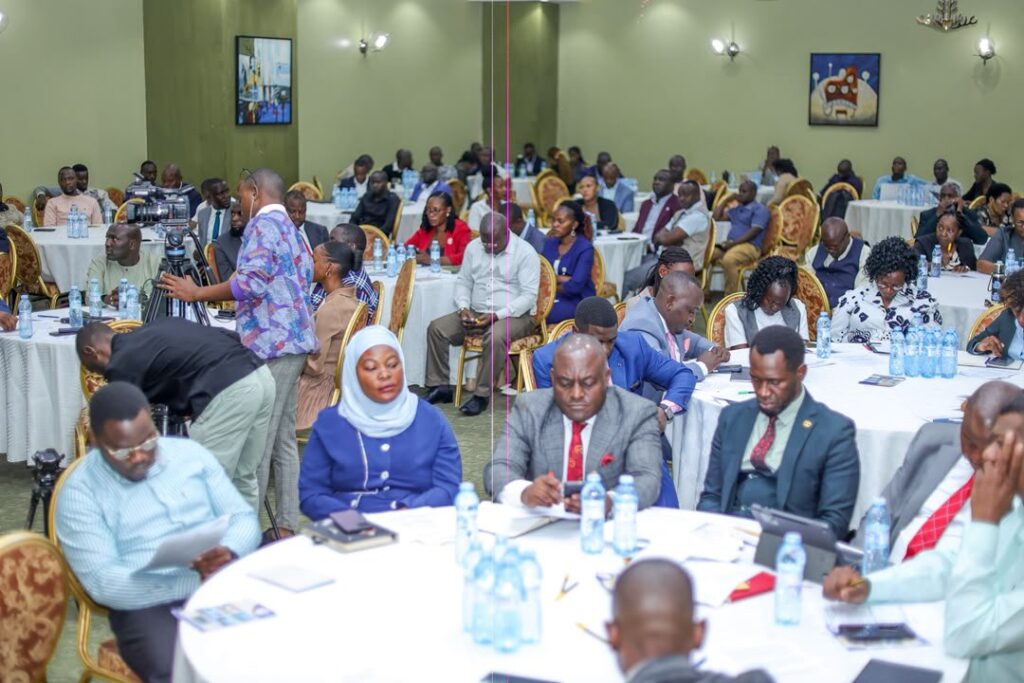
She cited cases involving buildings and encroachment on environmental reserves, saying owners should first receive notices and reasonable time to rectify the violations.
Buzeki also urged traders operating in unauthorised spaces to consider the available designated trading areas, saying Kampala had hundreds of spaces that could accommodate traders. She said enforcement and urban management required cooperation between the authority and the public.
On education, she challenged leaders to consider the respective mandates of government institutions when setting budget priorities, noting that some functions relating to schools and staffing fall under other ministries. She said proposals to expand the functions devolved to divisions would require legal amendments where they went beyond the existing law.
Rubaga Division Mayor Zacchy Mberaze Mawula appealed for urgent intervention in flood-prone areas, citing Musavala, where heavy rains and ongoing roadworks had contributed to flooding and damage to homes.
He said several drainage channels had been blocked or were inadequate, leaving communities vulnerable whenever it rained. He called for the KCCA drainage department to intervene in affected areas.
Mawula also requested funding to improve the division’s administrative offices, saying the existing building was inadequate for staff and other operations.
He further called for the construction and rehabilitation of drainage channels, including Nabulagala, Nabunya and other channels serving flood-prone communities around Kasubi, Kawala and neighbouring areas.
The mayor also called for the expansion of Kasubi Market to provide more space for vendors, the construction of teachers’ accommodation, the renovation of school facilities and the rehabilitation of a building at Cheyamu Centre for use in supporting patient care.
Kawempe Division Mayor Dr Emmanuel Sserunjogi renewed his demand for a hospital dedicated to the division, saying residents needed better access to healthcare and that land had been acquired for the project using funds previously won by the division for good performance.
Sserunjogi said the hospital project had stalled after a change in the land’s status without adequate consultation with division leaders. He insisted that the facility remained a priority for Kawempe residents and called for the matter to be resolved.
He also questioned the current arrangement for devolving functions to city divisions, arguing that the division leadership lacked clarity over its powers, responsibilities and authority over staff.
“What we have is an arrangement, and we do not know where our powers begin and end,” Sserunjogi said, urging the government to clarify the system or consider full devolution of responsibilities to divisions.
He called for the establishment of six schools in Kawempe, citing a shortage of government-aided secondary schools and overcrowding in the existing institutions. He also raised concerns about land ownership and documentation for some public schools.
The mayor, however, acknowledged progress in road and drainage works, citing improvements in Kyanja and Katanga, while calling for more investment to address the division’s infrastructure needs.
Kampala Central Division Mayor Salim Uhuru said he wanted to see the construction of a new administrative complex for the division before the end of his five-year term.
Uhuru also raised concerns about the management of public assets, the future of Nakivubo settlement and the proposed use of premises for a presidential skilling centre. He said the existing school facility should be preserved for skills development and questioned claims that a presidential directive had authorised a different arrangement.
He welcomed the reported Shs19 billion allocation towards resolving issues surrounding Kiseka Market and called for greater involvement of division leaders in projects being implemented within their jurisdictions.
Uhuru also called for additional streetlights and faster roadworks, saying some projects had progressed slowly despite ongoing efforts by KCCA.
He further warned that noise pollution was affecting property owners, particularly in Kololo, and urged the authority to strengthen enforcement against establishments that disturb residents.
Nakawa Division Mayor Ali Bukeni, popularly known as Nubian Li, called for the completion of Kitintale Market, which he said had remained under construction for about 15 years.
He said traders operating at the market had already received eviction notices and were continuing to occupy the premises while awaiting the completion of the project. He asked KCCA to prioritise the market to provide vendors with a proper working environment.
Bukeni also called for increased investment in drainage infrastructure, saying flooding continued to affect residents in informal settlements during the rainy season.
He said Nakawa had only two KCCA health centres, Bukoto and Kiswa, and appealed for more facilities to improve access to healthcare. He welcomed the addition of a maternity ward at Kiswa Health Centre but said further investment was necessary.
The mayor also called for the maintenance of existing government-aided schools, the acquisition of land for new schools and improved supervision of street lighting. He cited Tanjala Road, where several installed lights were reportedly not functioning because of inadequate maintenance and repairs.
Minister of State for Kampala Kabuye Kyofatogabye acknowledged concerns raised by division leaders, particularly over funding, councillors’ remuneration and the scope of devolved functions.
He said some of the proposals could not be implemented under the current legal framework and would require amendments to the law.
Kyofatogabye said the government would need to consider the available resources before making commitments on increased funding and other demands. He also called for further engagement between the ministry, KCCA’s executive and division leaders to determine which proposals could be accommodated in the budget.
KCCA Speaker John Ssebuufu urged the ministry and authority officials to strengthen consultations with elected leaders before making decisions on projects affecting their constituencies.
He said division leaders should be involved in discussions on schools, public assets and other development projects instead of learning about decisions after they had been made.
Ssebuufu also raised concerns about differences in the allowances paid to elected leaders and the increasing number of parishes some representatives were expected to serve, calling for a review to ensure fairness.
The Speaker urged the ministry to work closely with the council and division leadership to resolve outstanding issues and agree on practical interventions within the available budget.
The conference forms part of the preparations for KCCA’s 2027/2028 financial year budget, during which leaders are expected to identify priority interventions, assess funding requirements and agree on projects to be submitted for consideration as the authority seeks to improve service delivery across Kampala.