

Mugula Dan
21/10/2026
The Uganda People’s Congress (UPC) has called on the government to immediately halt demolitions and evictions being carried out by the Uganda Railways Corporation (URC), demanding a humane and lawful approach that protects the dignity, property and livelihoods of affected Ugandans.
The party says the ongoing exercise to reclaim railway reserves has left families homeless and vulnerable, particularly low-income earners who invested their life savings in homes and businesses in the affected areas.
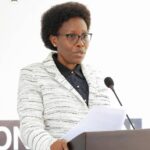
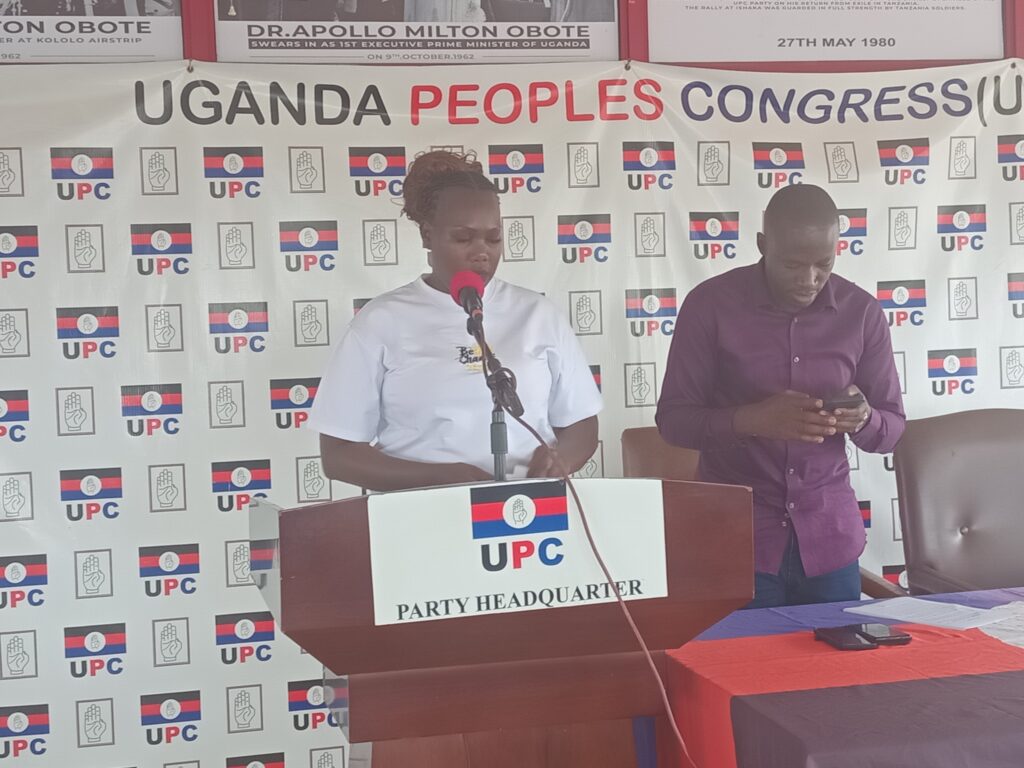
Speaking to journalists at the UPC headquarters on Wednesday, October 21, 2026, party spokesperson Sharon Arach Oyat said the party supports the revival of the railway network but strongly opposes the manner in which the evictions are being conducted.
Oyat said UPC was aware that a Cabinet meeting held on September 28, 2026, directed the Uganda Railways Corporation to reclaim railway reserves, followed by the corporation’s announcement of a nationwide operation effective October 12.
However, she questioned whether the affected communities had been given adequate notice and whether the government had put in place measures to relocate families facing eviction.
“We do not oppose reviving the railway. We all want it, and we understand its importance to the transport network. What we oppose is the inhumane way our people are being treated in the name of railway revival,” Oyat said.
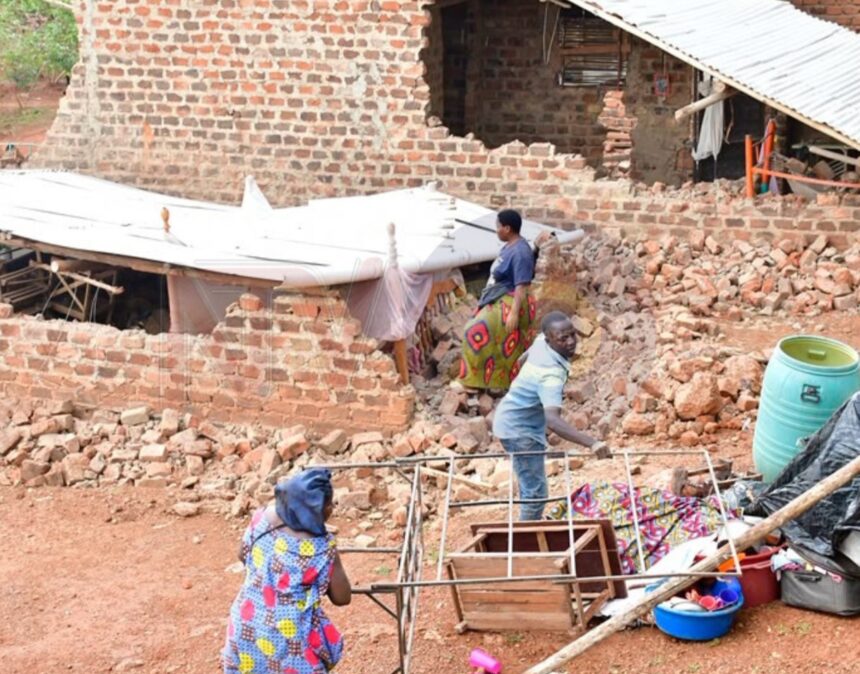
She cited the demolitions in Chegera on October 19, 2026, as an example of what she described as an unacceptable approach to enforcing government land rights.
According to Oyat, houses were brought down by tractors as mothers and children watched helplessly, pleading for more time to salvage their belongings.
“This is not enforcement. This is cruelty, and it must be condemned by all Ugandans who believe in human dignity,” she said.
The UPC spokesperson argued that even where land has been occupied irregularly, the affected people remain citizens whose constitutional rights to dignity, life and property must be respected.
She questioned why government agencies had allegedly allowed some people to settle and construct homes on land now identified as railway reserves, particularly in cases where occupants claim to have obtained land titles through official channels.
“Where was the government when these people were constructing buildings on those railway reserves? Are the Ministry of Lands and the institutions responsible for issuing land titles not part of the same government?” she asked.
Oyat said the government should take responsibility for addressing weaknesses in land administration, arguing that public land must be clearly demarcated, gazetted and protected to prevent unsuspecting citizens from investing in disputed areas.
She noted that some affected families had reportedly lived in the same locations for more than 20 years, raising concerns about how long-standing settlements were allowed to develop before enforcement action was taken.
According to her, the government should not wait until families have established homes, raised children and built livelihoods before announcing that the land they occupy belongs to the state.
She called for dialogue between the government and affected communities, saying a negotiated approach could allow the railway corporation to reclaim its land while minimising damage to property and disruption to people’s livelihoods.
Oyat also questioned the absence of clear resettlement and compensation arrangements for those facing eviction, especially people who may have settled on the land in good faith after acquiring documents they believed to be legitimate.
She expressed concern over remarks attributed to an official involved in the operation that the government was not obliged to compensate occupants because it was reclaiming its own land.
“What kind of Uganda are we having if a fellow Ugandan can be left homeless and told that the government has no responsibility because it is reclaiming its land?” she asked.
The UPC spokesperson further accused the government of applying inconsistent standards in the management of public land, arguing that authorities should be able to identify encroachment and protect railway reserves before illegal settlements become established communities.
She said the party, although outside government, would continue to advise the authorities on policies that affect ordinary citizens, insisting that development should improve people’s lives rather than expose them to unnecessary suffering.
In its appeal, UPC urged the government to immediately suspend ongoing demolitions and return to the negotiating table with affected communities.
The party called for a comprehensive verification exercise involving the Ministry of Lands and other relevant agencies to establish railway reserve boundaries, examine land titles and clarify ownership disputes.
It also demanded adequate and meaningful notice in accordance with the law, alongside a publicly available resettlement and compensation framework for eligible affected families, particularly those who may have settled in good faith.
UPC said the reclamation exercise should be conducted in a manner that respects human dignity and safeguards vulnerable households from being pushed into homelessness without a clear plan for their future.
The party reiterated its support for the rehabilitation and expansion of Uganda’s railway network, describing it as an important component of the country’s transport infrastructure and national development.
However, Oyat insisted that infrastructure development must go hand in hand with the protection of citizens’ rights and livelihoods.
“Let us build a railway, but let us not break the people of Uganda. Otherwise, we shall build a railway with no people to use it,” she said.
She concluded by reaffirming UPC’s solidarity with the families affected by the demolitions, urging the government to balance the need to protect public land with its responsibility to treat all Ugandans fairly and humanely.