


Dan Mugula
Fri 23/10/2026
The Uganda Cancer Institute (UCI) has urged Ugandans to seek early breast cancer screening and treatment, warning that delayed diagnosis remains a major challenge despite the availability of specialised cancer care in the country.
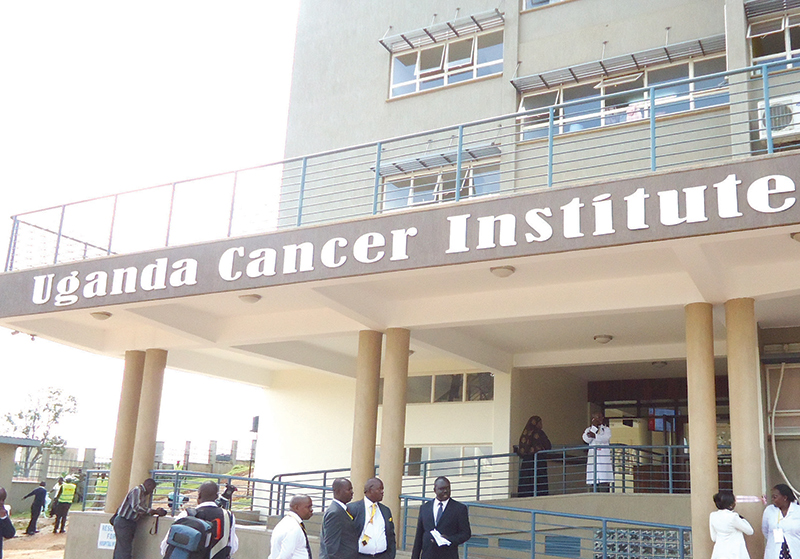
Dr James Kafeero, who heads the Department of Clinical Services under UCI’s Community Cancer Services Division, said many patients only seek medical attention when the disease has advanced, making treatment more difficult and reducing their chances of recovery.
Speaking to journalists at the Uganda Media Centre on Friday, Dr Kafeero said breast cancer often develops without pain in its early stages, leading many people to ignore breast lumps and other unusual changes until symptoms become severe.
“People come to us because of pain, yet breast cancer, like many other cancers, may not cause pain when it is still at an early stage,” he said, urging women and men to become familiar with their bodies and seek medical attention whenever they notice abnormalities.
He said about 75 per cent of cancer patients in Uganda and other parts of sub-Saharan Africa present with advanced disease, when the cancer has spread beyond the organ where it started, making treatment more difficult.
Dr Kafeero emphasised that early detection improves the chances of successful treatment and may allow doctors to remove only the tumour instead of the entire breast.
He noted that patients diagnosed at advanced stages may require a combination of chemotherapy, radiotherapy and mastectomy, depending on the extent and type of cancer.
However, he reassured Ugandans that cancer treatment is available locally and urged patients not to delay seeking care because of fears about the cost of treatment or the belief that cancer cannot be cured.
“People should not fear coming for treatment because of the cost. Treatment is available, and patients should come early so that we can assess them and provide the appropriate care,” he said.
Dr Kafeero said treatment at the Uganda Cancer Institute is tailored to each patient because breast cancer occurs in different forms and subtypes, requiring specific investigations before doctors determine the most appropriate treatment.
He explained that patients may undergo tests to establish the cancer’s stage and biological characteristics, including hormone receptors and HER2 status, which help guide treatment decisions.
He added that not every breast cancer patient requires chemotherapy, radiotherapy or removal of the entire breast, as treatment depends on the individual diagnosis and stage of the disease.
Dr Kafeero also dismissed claims that keeping mobile phones inside bras causes breast cancer, saying there is currently no established scientific evidence linking electromagnetic waves emitted by phones to the disease.
He said such claims should be assessed through scientific research rather than accepted as facts based on rumours circulating within communities.
On breastfeeding, Dr Kafeero said breastfeeding a baby is associated with a reduced risk of breast cancer, although the level of protection varies. He encouraged mothers who are able to breastfeed to do so, noting that breastfeeding also provides nutritional and immune benefits to infants.
He identified breast lumps, changes in breast skin, nipple retraction, unusual nipple discharge, including blood, and swelling in the armpit as possible warning signs of breast cancer.
The doctor cautioned against waiting for pain before seeking medical attention, explaining that some of these symptoms may appear when the disease has already progressed.
He encouraged women and men to become familiar with the normal appearance and feel of their breasts so that they can identify unusual changes early. Anyone who notices a new lump or other concerning changes should seek medical assessment promptly.
Dr Kafeero said women could examine their breasts regularly, preferably five to 10 days after menstruation begins, when breast swelling and tenderness may be reduced. Women who have reached menopause can choose a consistent day each month to check for changes.
He also encouraged women aged 35 to 40 years and above to discuss appropriate breast screening, including mammography, with qualified health workers, depending on their individual risk and applicable clinical guidance.
According to Dr Kafeero, breast cancer remains one of the leading cancers affecting women in Uganda and is among the country’s most significant cancer care challenges. He said the increasing burden underscores the need for public awareness, early diagnosis and access to treatment.
He added that Uganda continues to strengthen cancer awareness and screening programmes as part of broader efforts to address non-communicable diseases.
Unlike cervical cancer, for which vaccination against the human papillomavirus (HPV) can prevent many cases, breast cancer does not currently have an equivalent widely used vaccine for primary prevention. This makes awareness, risk reduction and timely diagnosis particularly important.
Dr Kafeero said health facilities provide opportunities for patients to seek assessment and, where necessary, referral for specialised care. He encouraged people with suspected breast cancer to visit their nearest health centre rather than wait until the disease becomes severe.
He further noted that cancer treatment has become increasingly individualised, allowing specialists to select therapies based on the type of cancer and the characteristics of each patient.
“There is no need for a patient to leave Uganda to seek cancer treatment simply because they believe better care is only available abroad,” he said, adding that the country has developed specialised services for managing different cancers.
As Uganda joins the international community in marking Breast Cancer Awareness Month in October, Dr Kafeero called on the public to support patients and families affected by the disease while promoting early screening and treatment.
This year’s theme, “Every Story Is Unique. Every Journey Matters,” highlights the different experiences of people living with breast cancer and the importance of providing care suited to each patient’s needs.
Dr Kafeero urged communities to challenge myths surrounding cancer, support those undergoing treatment and encourage people with suspicious symptoms to seek medical attention without delay.
He said improving awareness and reducing late diagnosis would be crucial to increasing survival rates and easing the burden of breast cancer on Ugandan families and the health system.